
Why Small Daily Rituals Create Lasting Change
There are mornings when ideas seem to arrive effortlessly. Writing flows, painting feels exciting, and everything I had planned for the day comes together with ease. Then there are mornings when none of that happens.
Recently, I sat down to create this blog and found myself staring at a blank screen. I made a cup of tea, checked my emails, reorganised a few papers on my desk, and found several other tasks that suddenly seemed much more appealing. It made me smile because, after working as a psychologist for twenty-eight years, one thing I know for certain is that waiting to feel motivated is one of the least reliable ways to create meaningful change.
That moment reminded me of a lesson I have learned over and over again, both in my own life and through the thousands of people I have had the privilege of working with. Motivation is wonderful when it shows up, but it is rarely enough to carry us through the long term. It comes and goes depending on our mood, energy levels, stress, sleep, hormones, and circumstances.
Discipline, on the other hand, helps us continue taking small steps even when motivation is nowhere to be found. For many years, I misunderstood discipline. I associated it with rigid routines, perfectionism, and forcing myself to do things I didn’t want to do. It felt restrictive rather than liberating.
My perspective has changed completely. I now see discipline as one of the greatest expressions of self-care because it helps us create a life that reflects what we truly value rather than simply reacting to how we happen to feel in the moment.

Motivation Starts the Journey. Discipline Keeps You Moving.
Many of us wait until we feel inspired before we begin.
We wait until we feel motivated to exercise, to feel organised before decluttering the house, to feel confident before applying for a new job to feel creative before picking up a paintbrush.
Unfortunately, feelings are unpredictable. If we depend entirely on them, we often remain stuck exactly where we are.
The most meaningful changes in my own life have rarely happened because I felt inspired every day. Becoming a psychologist required years of study. Developing my private practice took patience and consistency. Completing the Wise Women Oracle collection required me to keep painting even on days when inspiration felt distant. Writing these blogs means getting into a rhythm, whether the ideas arrive easily or not.
None of those achievements happened because I was constantly motivated. They happened because I kept returning to what mattered most.
Your Values Are Your Compass
One of the most important lessons I have learned through Acceptance and Commitment Therapy is that values provide direction when motivation disappears.
Goals are things we achieve whereas values are the way we choose to live.
You may value health, creativity, kindness, learning, family, adventure, compassion, or personal growth. Once you become clear about your values, discipline begins to feel less like forcing yourself and more like honouring what is important to you.
I don’t blog because I always feel like writing. I blog because I value learning and sharing ideas. I don’t paint because inspiration magically appears every morning. I paint because creativity is one of the ways I make sense of the world. I don’t continue learning because I need another qualification. I continue learning because curiosity is one of the values that has shaped my life for decades.
When our actions align with our values, discipline becomes an act of self-respect rather than self-punishment.
Small Steps Create Big Changes
One of the biggest mistakes people make is believing they need to change everything at once. The brain doesn’t usually respond well to dramatic change. New habits are far more likely to stick when they begin with small, achievable actions that can be repeated consistently.
Rather than committing to an hour at the gym, begin with a ten-minute walk.
Rather than deciding to meditate every day for thirty minutes, start with five mindful breaths before getting out of bed.
Rather than waiting for an entire free day to paint, spend fifteen minutes sketching in your journal.
Small actions repeated consistently create momentum, and momentum builds confidence. Confidence encourages further action. Over time, those seemingly insignificant choices become part of who we are.
Freedom Is Built Through Daily Choices
When people hear the word freedom, they often imagine having fewer commitments or fewer responsibilities. My experience has been quite the opposite. The greatest freedom I have experienced has come from the routines and rituals that support my wellbeing.
Making time to move my body, protecting time for creativity, continuing to learn, nurturing meaningful relationships and looking after my physical and emotional health. These practices didn’t become part of my life by accident. They became habits because I chose them often enough that they gradually became part of my identity.
Freedom isn’t found by avoiding discipline. It grows from making consistent choices that support the life we want to create.
Inner Compass Check-In
Take a few moments to reflect.
- What do you value most at this stage of your life?
- If someone observed how you spent your time over the past month, would they recognise those values in your daily choices?
- What is one small habit you could begin this week that reflects the person you want to become?
Remember, it doesn’t need to be ambitious. It simply needs to be consistent.
Creative Integration Practice
Choose one value that feels especially important to you right now.
Write it at the top of a page. Then ask yourself:
“What is one small action I could repeat most days that would honour this value?”
- If your value is health, perhaps it is a daily walk.
- If your value is creativity, perhaps it is fifteen minutes in your art journal.
- If your value is connection, perhaps it is calling someone you care about each week.
Keep the practice simple enough that it feels achievable, even on difficult days. Success is rarely built through heroic bursts of effort. It is built through ordinary actions repeated with intention.
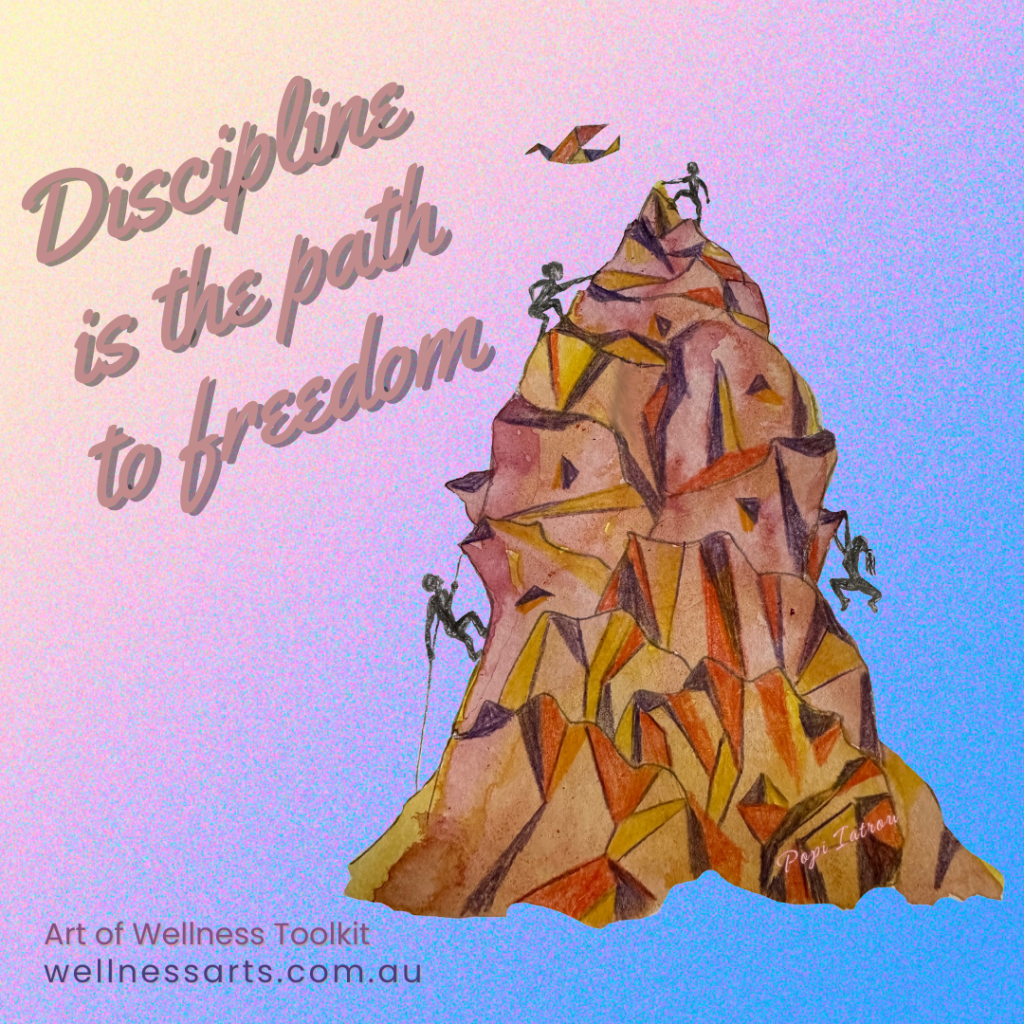
Discipline Is the Pathway to Freedom
An Art of Wellness Practice
The Discipline Leads to Success chapter inside my Art of Wellness Toolkit explores practical ways to build lasting habits by aligning daily actions with your values. Instead of relying on motivation alone, you’ll discover how small, meaningful rituals can create sustainable change and help you build a life that reflects what matters most.
Final Reflection
The older I become, the less I believe that meaningful change happens because we finally feel ready. More often, it happens because we begin before we feel ready.
We take one small step. Then another. And another. Eventually, those small steps become habits, those habits shape our character, and our character influences the life we create.
Perhaps discipline isn’t about becoming someone different. Maybe it is simply the daily practice of becoming more fully yourself.
I’d love to hear from you. What is one value that guides your life, and what small daily practice helps you honour it? Share your thoughts in the comments below. Your ideas may inspire someone else to take their own first step.


Discover more from Wellness
Subscribe to get the latest posts sent to your email.
Leave a Comment