
A few weeks ago, I was chatting with a friend after yoga when she casually suggested that I start an art group.
It wasn’t a revolutionary idea. In fact, it was something I had been thinking about on and off for years. Yet as she spoke, I felt an immediate sense of recognition. I could suddenly see it. A small group gathered around a table on my balcony. Art materials scattered everywhere. People creating, experimenting, sharing stories, and reconnecting with their creativity.
What struck me most wasn’t the idea itself. It was the realisation that I already had everything I needed.
- The art supplies.
- The group exercises.
- The experience facilitating groups.
- The psychology background.
- The love of creativity.
- The space.
For years, these interests had seemed like separate parts of my life. Yet in that moment, I could see how they had quietly been moving towards one another all along.
The idea didn’t feel like starting something new. It felt like bringing together pieces that were already there.
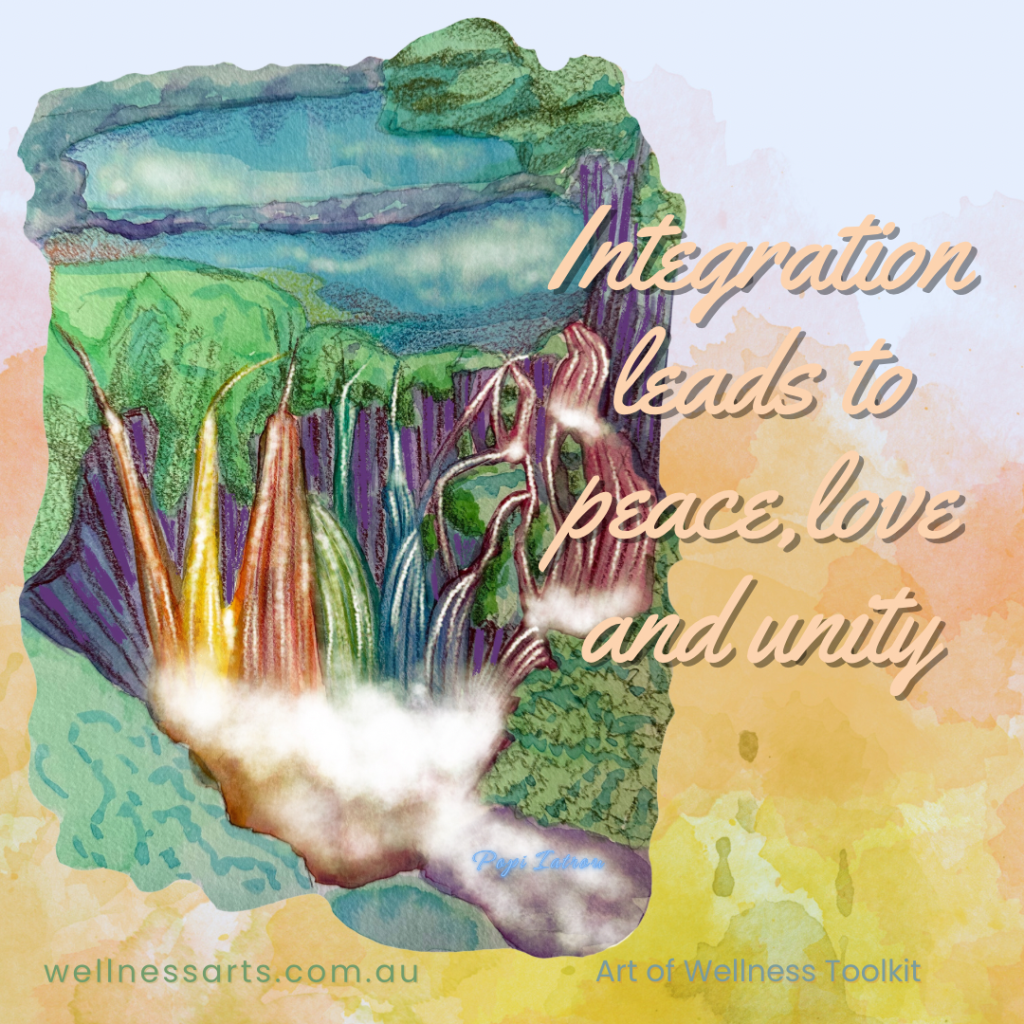
Later, as I reflected on this experience, I was reminded of the work of interpersonal neurobiologist Dr Dan Siegel and his concept of integration. The more I have reflected on this idea over the years, the more I have come to believe that it may be one of the most important principles underpinning personal growth, emotional wellbeing, healthy relationships, and even social harmony.
What Is Integration?
Dr Dan Siegel describes integration as the universal process that supports growth and wellbeing. Integration occurs when different parts maintain their unique qualities while becoming linked together in healthy ways.
In simple terms, integration is about connection. It is about recognising differences while building bridges between them.
We see this process everywhere in nature, in relationships, in communities, and within ourselves.
Growth does not occur because everything becomes the same. Growth occurs because different parts learn how to work together.
If you’d like to explore this concept further, I share more about integration in this short video from my Art of Wellness Toolkit:
Watch the video here:
Integration Begins in the Brain
One of the examples Dr Dan Siegel often uses is the development of the two hemispheres of the brain.
The right hemisphere develops earlier and is closely connected to emotions, sensations, relationships, and non-verbal experiences. This is one reason toddlers often experience big emotions. They feel deeply but have limited language to explain what is happening inside them.
As children grow, the left hemisphere develops more rapidly. Language flourishes, and children begin learning how to name and describe their experiences.
Over time, the two sides become increasingly integrated. Feelings can be identified, understood, communicated, and regulated more effectively. This process of integration helps children make sense of their inner world.
In many ways, personal growth throughout life follows the same principle.
The Many Parts of Ourselves
Most of us carry different parts within us.
- There is often a part that seeks safety and another that longs for adventure.
- A part that wants certainty and another that craves growth.
- A rational part and an emotional part.
- A responsible adult and a playful child.
Problems often arise when one part dominates while another is ignored. For example, if we only listen to the part of ourselves that seeks safety, we may miss opportunities for growth. If we only listen to the adventurous part, we may overlook genuine risks and responsibilities.
Integration does not ask us to choose one side over the other. It invites us to listen to both.
Wisdom often emerges when seemingly opposing parts are allowed to work together rather than compete for control.
Seeing the Bigger Picture
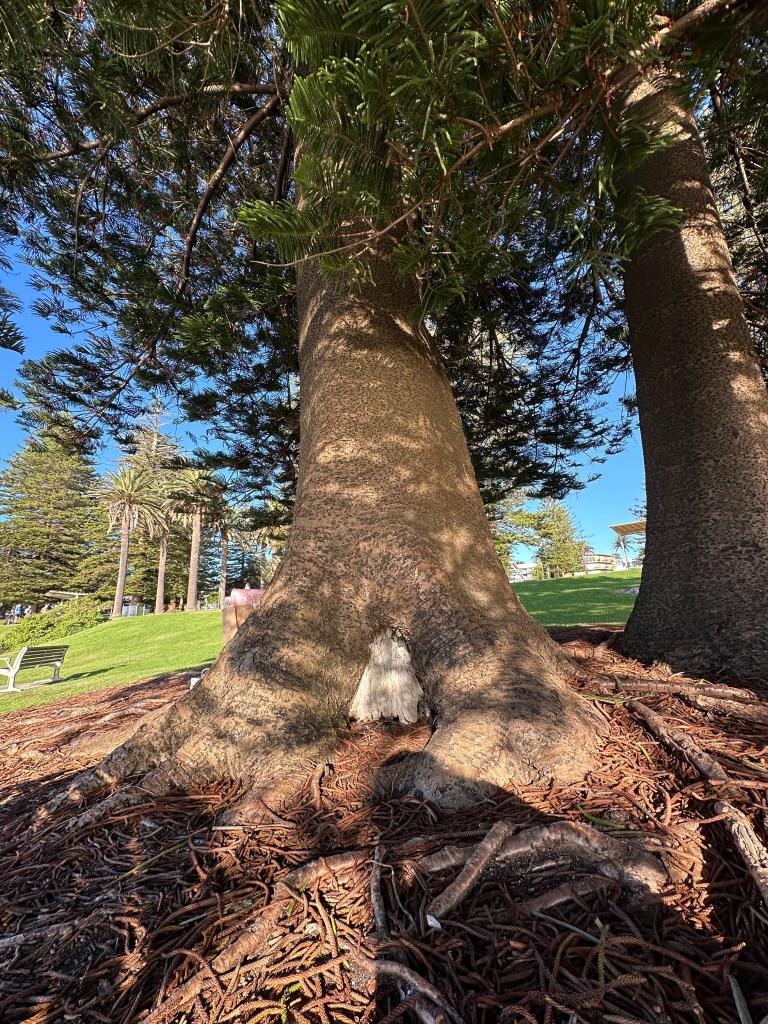
Recently, I have been using the Narrative Therapy Tree of Life exercise that I discovered many years ago with many of my clients.
What I love about this activity is how it helps people step back and view their lives from a broader perspective.
The roots represent the people, experiences, culture, and history that shaped them.
The trunk represents their strengths, values, and skills.
The branches represent their hopes, dreams, and aspirations.
As clients begin mapping their lives onto the tree, something remarkable often happens. They start to notice connections. Experiences that once felt unrelated begin to make sense. Challenges reveal strengths they helped develop. Painful chapters reveal lessons that continue to guide them. Relationships, setbacks, opportunities, and achievements become part of a larger story.
What initially felt fragmented begins to form a coherent whole.This is integration in action.
Integration Beyond the Self
Integration is not only a psychological process. It also applies to relationships, communities, cultures, and society.
Much of the conflict we experience as human beings arises when differences are viewed as threats.
Different opinions. Different beliefs. Different lifestyles. Different cultures.
Yet integration teaches us that differences do not have to create division. In fact, diversity is often what strengthens a system.
Healthy relationships are not built on sameness. They are built on understanding.
The same principle applies to families, communities, and cultures. When we take the time to understand rather than judge, fear begins to soften. Curiosity grows. Empathy expands.
The invisible walls that separate us become easier to dissolve.
Creative Integration Practice: Your Tree of Life
Take some time this week to draw your own Tree of Life.
- In the roots, write the people, experiences, traditions, places, and influences that shaped you.
- In the trunk, write the strengths, values and skills you have.
- In the branches, write your hopes, dreams, goals, and aspirations.
- The storm clouds represent life’s challenges
- The leaves are the important people in your life.
- The fruits represent the gifts that have been given to you.
Then step back and look at the whole tree.
What connections do you notice?
What strengths emerged from challenges?
What experiences helped shape the person you are today?
What parts of your life have been integrating without you even realising it?
You may discover that your life makes more sense than you thought.
Final Reflection
When I look back over my own life, I can see that many experiences that once seemed unrelated have gradually woven themselves together.
Psychology – Art – Dance – Yoga – Creativity – Writing – Relationships – Challenges – Teaching.
Each has contributed something valuable.
At the time, I often couldn’t see how the pieces would fit together. Looking back, the connections seem much clearer.
Perhaps this is one of the gifts of integration. It reminds us that growth is not always about adding something new. Sometimes it is about recognising the connections that were there all along.
I’d love to hear from you. If you were to draw your own Tree of Life, what roots, strengths, and branches would stand out most? Share your reflections in the comments below. Your story may help someone else recognise the hidden threads weaving through their own life.
2 responses to “The Psychology of Integration: How Different Parts of Our Lives Become Whole”
-
Thank You, Popi. ❤️
Such helpful reading today-
Thank you for reading 🌻🌻🌻
-


- Hypnosis Through a Holistic Psychology Lens: More Than Just “Relaxation”
- Alcohol Doesn’t Create Joy. It Borrows It From Tomorrow.
- Discipline Is the Pathway to Freedom
- The Psychology of Integration: How Different Parts of Our Lives Become Whole
- Rediscovering the Power of Play for Creativity
Discover more from Wellness
Subscribe to get the latest posts sent to your email.


Leave a Comment